
A viral video can destroy reputations in seconds. One clip, one angle, one moment—and suddenly, millions have already made up their minds.
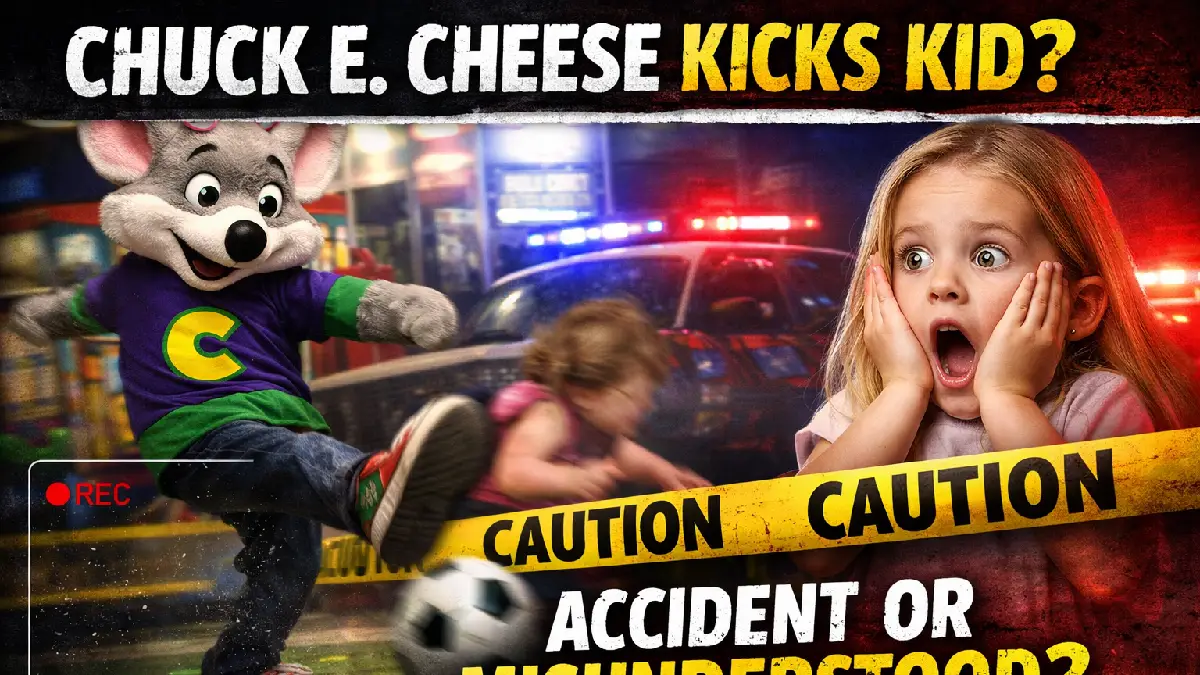
That’s exactly what’s happening with the latest Chuck E. Cheese viral video, where a mascot appears to kick a child during a game. The internet is split: outrage on one side, defense on the other.
But here’s the real question: Did this actually happen the way it looks? Or are we watching a classic case of viral misinterpretation?
Let’s break it down.
What Happened in the Viral Chuck E. Cheese Video?
The footage—now circulating across platforms—shows a Chuck E. Cheese mascot preparing to kick a soccer ball inside an arcade area.
At first glance, it looks shocking.
A child suddenly moves into the path of the kick, and contact is made. Within seconds, viewers online labeled it as intentional.
However, multiple social posts suggest the clip is being taken out of context, with the incident likely being accidental rather than aggressive.
Why the Video Looks Worse Than It Actually Is
Limited Visibility Inside Mascot Costumes
One critical detail most viewers ignore: mascot costumes severely restrict vision.
- Peripheral vision is almost nonexistent
- Movement is slow and often delayed
- Performers rely on forward-only visibility
This means the performer likely did not see the child approaching from the side.
Timing Was the Real Problem
From frame-by-frame analysis:
- The mascot signals intention to kick
- The ball is stationary and in front
- The child suddenly runs into the kicking zone
This creates a perfect storm where timing—not intent—causes the incident.
Internet Reaction: Outrage vs. Rational Analysis
Like most viral content, reactions were immediate and emotional.
Common Reactions Online
- “This is unacceptable behavior!”
- “Fire the mascot immediately!”
- “This is why kids aren’t safe anymore.”
But a large portion of viewers took a more measured approach:
- “Looks accidental”
- “Kid ran into the kick”
- “Mascot couldn’t see”
This divide reflects a broader trend in viral video culture, where first impressions often overpower critical thinking.
The Bigger Context: Recent Chuck E. Cheese Incidents
This isn’t the first time the brand has gone viral for the wrong reasons.
A recent case involved a mascot being arrested for alleged credit card fraud during a birthday event, shocking families present.
Another disturbing incident included a violent fight at a children’s party, leaving one man seriously injured and kids traumatized.
These events have created a narrative where any new incident is instantly viewed through a negative lens.
Are We Too Quick to Judge Viral Clips?
This situation highlights a major issue in today’s digital ecosystem:
The Problem With Viral Videos
- Clips are often short and lack context
- Camera angles can be misleading
- Audiences react before verifying facts
In reality, what looks intentional may simply be:
- Poor timing
- Limited visibility
- Miscommunication during play
Why This Video Is Going Viral Now
Interestingly, this incident aligns with a surge in search trends around:
- funny st patricks day videos
- funny videos of animals
- funny minecraft videos
- funny trump videos
- funny animal videos for kids
- funny videos short
- funny dogs videos
The internet is currently primed for short, viral, shareable clips—especially those that trigger strong reactions.
This Chuck E. Cheese video fits perfectly into that pattern:
- Short
- Shocking
- Easy to misinterpret
- Highly shareable
Breaking Down the Scene: Key Observations
Let’s analyze the moment like an expert:
| Factor | What Happened | Interpretation |
|---|---|---|
| Mascot movement | Preparing to kick ball | Normal activity |
| Child movement | Sudden entry into frame | Unpredictable |
| Contact moment | Kick + child overlap | Accidental timing |
| Reaction after | Appears apologetic | No aggression |
This table alone shows the situation is far from clear-cut misconduct.
What Parents Should Actually Take Away
Instead of focusing only on outrage, there are practical lessons here:
1. Supervision Still Matters
Even in safe environments, kids move unpredictably. Always stay alert.
2. Understand Play Zones
Interactive areas—especially sports games—can create unexpected collisions.
3. Viral ≠ Reality
Not every trending video reflects the full truth.
Frequently Asked Questions (FAQ)
Was the Chuck E. Cheese mascot intentionally kicking the child?
There is no clear evidence of intent. The situation appears to be an accident caused by timing and limited visibility.
Why do mascot performers have poor visibility?
Mascot costumes are designed for appearance, not functionality. Vision is usually restricted to small front-facing openings.
Has Chuck E. Cheese responded to this incident?
As of now, there is no official detailed statement tied specifically to this viral clip, though similar incidents have drawn attention in the past.
Why do such videos spread so fast?
Because they combine:
- Shock value
- Emotional reaction
- Easy sharing format
This aligns with trends like funny videos short and viral content cycles.
Should parents be concerned?
Not necessarily. Incidents like this are rare and often exaggerated online. Basic awareness and supervision are usually enough.
The Real Lesson: Context Is Everything
The biggest mistake people make online is assuming what they see is the full story.
In reality:
- A 5-second clip rarely shows the full sequence
- Human error is often mistaken for bad intent
- Viral outrage spreads faster than facts
The Chuck E. Cheese video is a perfect example of how perception can overpower reality.
Final Thoughts: Before You Share, Think
It’s easy to laugh, criticize, or outrage-share content—especially when it resembles trends like funny videos of animals or funny dogs videos.
But this isn’t just entertainment.
It involves real people, real consequences, and real reputations.
So next time a viral clip appears on your feed, pause and ask:
Am I seeing the truth—or just a moment taken out of context?